Saturday, September 21, 2013

Week 38

19 Sep 2013, Wekiwa Springs State Park

This tortoise looks big, but looks fool you with photos ...


This is a hatchling Gopher Tortoise.  It is about the size of a 50 cent piece and was right on the road leading to Sand Lake.  I moved it off the road and I hope it survives to adulthood.

Migration continues on ...


This Brown Thrasher is a year round resident in Central Florida but I saw many more than normal this week as migrants from up north move south into this area for the winter.

16 Sep 2023, Little Big Econ State Forest

Finally, no clutter ... no, not talking about the teenager's bedroom. 


After years of trying to get an American Redstart in a relatively clear frame without leaf and twig clutter, I finally got my chance.  Mary and Eli Schaperow and I were at the Little Big Econ State Forest when this male appeared. 

Ovenbirds were right on the trail and as we entered a clearing, we saw a flycatcher doing its flycatching thing of grabbing an insect in mid-air and returning to its same spot.


It was an Eastern Wood-Pewee.  We also had the rare dark morph Short-tailed Hawk do a fly-over.

Thursday, September 12, 2013

Week 37

12 Sep 2013, Wekiwa Springs State Park

Here I am, sitting on a lawn chair at Wekiwa Springs SP, gazing up into the heavens looking for high altitude migrating raptors flying thousands of feet high.  A shadow zips by me followed by a woooosh and I am then staring at the rear end of what I thought was a Merlin flying no more than 15 feet above the ground--it went right over me.

As it neared a dead snag by the equestrian area, it spread its wings as it rose up to land and the wings were so long I said to myself, "Cool, another Peregrine".  I walked over to the equestrian area and got this photo:


I was surprised--it actually was a Merlin.   See that dragonfly buzzing overhead?  That's what this Merlin did to me.

A short time later, while looking at some Black Vultures, a dark morph Short-tailed Hawk entered the scene.


Look at the leading edge of the wings of this Short-tailed Hawk above.  See how smooth they are?  In the next picture below, the Short-tailed Hawk starts kiting and the alula extends out from the wing ...


You could not even see where the alula was in the first photo.  Like slats on an aircraft, the alula assists in providing lift when the raptor slows down to kite and when it lands.

This has been a great time for raptor watching here recently--a Peregrine Falcon migrating at high altitude, Bald Eagles, Red-shouldered Hawks plentiful, Red-tailed Hawks, a Cooper's Hawk the previous week, a migrating Merlin trying to take my head off, and a Short-tailed Hawk kiting right overhead.

There is nothing special about this location that draws raptors here.  It simply has some big open sky where you can see good distances.  No matter where you live, find some "big sky", some shade to keep you cooler, pack some cold drinks and snacks and go hawk watching during the next few weeks. 

Better yet, go to a real hawk watch site where raptors funnel through in concentrated numbers.  The closest site for many of you would be in the Keys--the season is Sept 15 to Nov 15.  I'll likely go to Hawk Mountain, PA for a while (the grandaddy of American hawk watch sites) then head down to the Keys at our Florida Keys Hawkwatch at Curry Hammock State Park.

Wednesday, September 11, 2013

In-flight Field Marks of the Juvenile Red-tailed Hawk

10 Sep 2013, Lake Norris Conservation Area

In-flight Field Marks of the Juvenile Red-tailed Hawk
 
The two images below are of the same juvenile Red-tailed Hawk that I observed 10 Sep 2013 at the Lake Norris Conservation Area, Lake County, FL.  The terminology you hear and see is usually not mentioned in the typical field guides because field guides are designed to be brief.  This overview will mention some of the most common terms used when describing a Red-tailed Hawk; some terms apply to all birds.
 
Underside view:
 
 
CLICK TO ENLARGE; "X" in upper right to go back
 
A key field mark of the juvenile Red-tailed Hawk is how much darker the secondary flight feathers are compared to the primary flight feathers.  In clockwise rotation, p10 is the most forward primary feather, then you see where I noted where p6 is;  p1 is next to s1. 

Look closely at the entire s1 feather (and the rest of the secondary feathers) and you see the dark coloration compared to the primary feathers; compare closely p1 to s1 to see how the primaries and secondaries differ.  This is why there is a "window" or "panel" shown in the image below.  The ten primary feathers lack this dark coloration thus creating the wing panel or translucent window.  p10 though p6 may show dark tips but the base is still light.
 
The counting order is simply different with the secondaries.  Think of it as a rocket lifting off.  p10, p9, p8, ...p1, then s1, s2, s3 etc. as you get closer to the body of the bird  There is no zero.
 
In the image below, from the topside, you will see how this "translucent window" or "wing panel" appears.
 
The "terminal band" on the tail is 2 to 3 times wider than the rest of the thin dark bands on the juvenile.  Some authors may describe this as the "subterminal band", meaning the second to the last band (counting toward the tip of the tail).  The tip of the tail is white.  In some raptors or other birds, if this white edging is wide enough, it will be referred to as the terminal band and then this wider band in this image, in that case, may be referred to as the subterminal band.  No need to get confused here because in nearly all cases, they are simply referring to a wider band at the tip (or near the tip) of the tail.  The adult usually lacks the tail bands but often retains a line or thin dark subterminal band.  Tail banding is usually not seen in the field, even if clear in close-up photos.
 
The "patagial mark" is the dark bar on the patagium, as illustrated above.  Sibley's Field Guide refers to "the dark mark on leading edge of underwing".  This is the #1 field mark in nearly all subspecies of the Red-tailed Hawk.  If you see a patagial mark in Florida, you can rule out any other raptor with a high degree of confidence.  This mark is unique to the Red-tailed Hawk.  If it is not, then it is an anomaly. 

The streaking in the belly, the "belly band", is another key mark for the Eastern subspecies (certain subspecies it will be missing) but some other raptors can show some streaking here.  Usually, it is so prominent and contrasts with the clean white chest so much that it is the #2 key field mark for Eastern Red-tails.  The belly band is easier to see than the dark area on the patagium at a distance.

The white chest contrasts with the belly band in Eastern Red-tails.  Other Florida buteos usually show some streaking or spots on the chest.
 
Unlike the patagial mark, the "comma" is not unique to the Red-tailed Hawk.
 
Top-side view:


This is the same hawk as above but further away.  The "bulge" is often prominent in the Red-tailed Hawk, illustrated here by the third red line from the top.  This is a key mark.  Other Florida buteos don't show a prominent bulge.  If you note the first image from the underside, you really don't see this bulge well.  The hawk in this topside view is more into a soar with the "hand" or outer primaries pushed forward and that exaggerated the "bulge", something you will often see or hear when birders describe a Red-tailed Hawk.
 
Look how obvious the wing panel is, illustrated by the area between the top two red lines.  The Red-shouldered Hawk has a crescent shaped wing panel that is much smaller.  The juvenile Red-tailed Hawk has a large square shaped wing panel that, as you saw from the above image, is created by all ten primary feathers being lighter colored than the secondaries.

If you go to my Aug 21, 2013 blog post, I show a side-by-side view of an adult and juvenile Red-tailed Hawk and you can see where the adult lacks the wing panel.
 
Other topside marks:  The tail is not red because it is a juvenile.  The white area in the rump has thrown birders off, thinking they saw anything from a Golden Eagle to a Snail Kite to a Cooper's Hawk, to a Northern Harrier, et al.  This image shows the tips of the first four primaries turned up but that is not a diagnostic mark.  The Short-tailed Hawk more commonly shows upturned wing tips.

As a final note, new birders need to remember what a field guide is.  The key word is “field”—these guides are brief and small, designed to carry into the field so you do not get detailed descriptions and explanations of terms used.  That is what a desk reference is for or an online reference such as Birds of North America Online.  Hopefully, new birders picked up some tips here to not only help ID a Red-tailed Hawk but to know what some of this terminology means.


Sunday, September 8, 2013

Week 36

8 Sep 2013, Rock Springs Run State Reserve, Lake County


My, what a big tail you have!
 
Juvenile Red-shouldered Hawk.


Coyote Ugly?  Only in movie titles.  Coyote nice-looking here.
 
Everybody says the coyotes are everywhere and numerous but I don't see them that often.  This one was close by today at mid-day in Rock Springs Run State Reserve.

2 Sep 2013, Black Bear Wilderness Area, Seminole County


"Look Mom, I have two bonus stripes."
 
Of the three five-lined skinks, the juvenile of the Broad-headed Skink can have seven lines like this one.  With a rainbow of colors, the juvenile is pretty attractive also.  The adult loses the rainbow.
 
2 Sep 2013, Wilson's Landing, Seminole County


The prettiest eyes in the animal kingdom.

If this Royal River Cruiser does not have the prettiest eyes, what does?  

Monday, August 26, 2013

Week 35

31 Aug 2013, Orlando Wetlands Park

It was a very good day for our monthly butterfly and dragonfly survey and for the next year we will be doing the survey at Orlando Wetlands, and that is a treat in itself.


This Dorantes Skipper, Urbanus dorantus, is listed as a vagrant in this area, more common in southern Florida.


This is an attractive species, the Long-tailed Skipper, with its gorgeous green and blue on the topside of the body.  The blue area is mostly in the shadows in this image but you can see the blue better in the next image ...


Also, notice how the lighting affects the color and pattern of the wings in these two photos, one shows it, one mostly hides it.

The butterflies are beautiful, however, they are also the prey of ...


... prey of spiders (the butterfly might be a Zarucco Duskywing).


... prey of Mantids.  Look closely.  The Mantid is eating right in the middle of the abdomen of the butterfly.  They camouflage themselves well.  What we think are small twigs can be Mantids.


... prey of dragonflies like this male Eastern Pondhawk.
 
If these butterflies are not being eaten now ...


... they soon will be; if this Cloudless Sulfur doesn't vacate the premises quickly, that big spider will soon make this butterfly victim #4.

30 Aug 2013, Merritt Island NWR


At Merritt Island NWR, on East Gator and Peacocks Pocket, the narrow trail road and its vegetation is all there is with water all around, so birds like this Loggerhead Shrike will perch in the trail shrubs there and sometimes your car is practically right next to them.  I took this photo out my car window.


This Wilson's Phalarope (center) is probably thinking, "Why am I the center of attention?"  It has four Yellowlegs sp. checking out the "different one" while the Dowitcher sp. (far right) could care less.


Look at that beautiful pruinose blue thorax on this male Seaside Dragonlet -- click the image to enlarge it.  Not all these males get this pruinosity.  Normally, they are all glossy black, but some of them get this pruinose overlay.


This is a very common species near the coast, the Marl Pennant.  I was so pleased that I had a clear background and got my best image yet of this species.

29 Aug 2013, Black Bear Wilderness Area

OK any of you bug experts out there.  What the heck is this thing?


Update ..... it is a Red-footed Cannibalfly

Usually, we try to ID a species.  In this case, I don't know what genus, what family, I don't even know what order this thing belongs to.  Grasshoppers have hind legs with a base near posterior of the thorax; this thing has its legs coming out way up front at the anterior end.  The wings are not as long as the abdomen.  Grasshoppers with wings usually have wings longer than their abdomen.  It seems to lack antennae but that may be a single antenna protruding from its face.  It flew from this twig to a nearby plant.

Update ... some experts informed me this is a "Robbery Fly".  The order is Diptera. The superfamily is Asiloidae.  The family is Asilidae.  Common name is "Red-footed Cannibalfly".  Thank you !!!

Camera shy birds ... have you ever tried to take the picture of somebody and they go running for cover.  Birds do it too.


Camera shy male Hooded Warbler


Camera Shy American Redstart (at least seven today)


Camera Shy Tufted Titmouse

I saw four black pigs being chased by what I thought was a Florida Black Bear.  It was actually momma pig and the size of this brute was amazing.  The baby pigs looked like adult pigs and momma looked like an SUV.  A Florida Black Bear would go running for cover if it saw this tank of a pig.

There was one Empidonax species again today but unlike yesterday when the Eastern Wood-Pewee vocalized, no such luck today.  I also saw what had to be a Cartharus thrush--it looked more brown tinged than rufous.  I did not even report it on my eBird report because I have no photo of it and species from that genus are not seen in central Florida in August.  It would be nice if we all could get photos of everything we see but that just will not happen.

I returned today to this location in hopes of again finding and photographing that male Prothonotary Warbler in stunning breeding blues.  I saw this species here in June of last year so I do think they breed here.  No luck today, but I did see one other Prothonotary Warbler (maybe two but the second one is a UFO).  Seven American Redstarts and three Black-and-white Warblers added to the migrants for today.

28 Aug 2013, Black Bear Wilderness Area

A male Prothonotary Warbler with the bluest of blue wings was my highlight today at Black Bear Wilderness Area in Seminole County.  What a stunning warbler it was.  I may just cancel my plans for tomorrow and return here to see if he is still there and try to get a photo worthy of this male's beauty.

An Eastern Wood-Pewee was the migrant of the day and American Redstarts were seen throughout the trail but not one male--all juveniles and females.  A Yellow-throated Vireo vocalized.  Dragonflies were patrolling the streams on both sides of the trail before it meets the Saint Johns River and Tawny Emperor, blues, swallowtails and a good group of butterflies were present.


The various habitats here are perfect for both the Barred Owl and this Red-shouldered Hawk.  Besides the Cypress Swamp, this location has Hydric Hammock, Floodplain Marsh, Floodplain Swamp and Mixed Hardwood Swamp.  I have seen bobcats and Florida Black Bear here; it is always a fun place to go to and seems active with wildlife most of the time.  In very close proximity to this location are Rock Springs Run State Park, Wilson's Landing, Seminole State Forest, Lower Wekiva Preserve State Park and the Markham Tract section of Wekiwa Springs State Park (an isolated section northeast of the main park).


I usually see Barred Owls on most trips to this location and today was no exception.  I imagine there are a lot of territorial fights among these two species, unless they made an agreement with each other to keep an eye out for the Great Horned Owls.


This raccoon and I ran into each other four times along the trail where it runs parallel with the Saint Johns River.  It would scamper off then reappear again further down the trail.

26 Aug 2013, Wekiwa Springs State Park

As I neared Wekiwa Springs State Park, I saw a buteo "soaring" in a way that practically had the hawk sky-writing its name with its characteristic flight style.  It is a stretch to call it soaring when it was stalling, kiting, stooping and once I pulled off the road and got my binoculars up, I confirmed it was a dark morph Short-tailed Hawk above the Seminole County section of the park.


In the main section of the park (Orange County), I saw either the same Short-tailed Hawk or another one along with three Red-shouldered Hawks and a Red-tailed Hawk.  Three Osprey were soaring at great heights--no fish up there, for sure, but the Osprey must like to just soar and enjoy their flights.   An Eastern Kingbird landed in a tree adjacent to the Sand Lake Parking Lot.

Predator and Prey ...

Here is the prey:


There seemed to be a lot of these Azalea Caterpillars (Datana major) crawling around, so ...

here comes the predator, the Fiery Caterpillar Hunter!!!


Calosoma scrutator

Gardeners should like this beetle because they like to dine on the Azalea Caterpillars.

I also saw a Pygmy Rattlesnake but I don't want to post an image because I am unsure if it was injured or not.  It looked fine but a long time passed by without it moving.

Update ... The Pygmy Rattlesnake died, a victim of a car or bicycle likely, according to a park staffer who found it after I did.

Wednesday, August 21, 2013

Week 34

23 Aug 2013, Lake Apopka

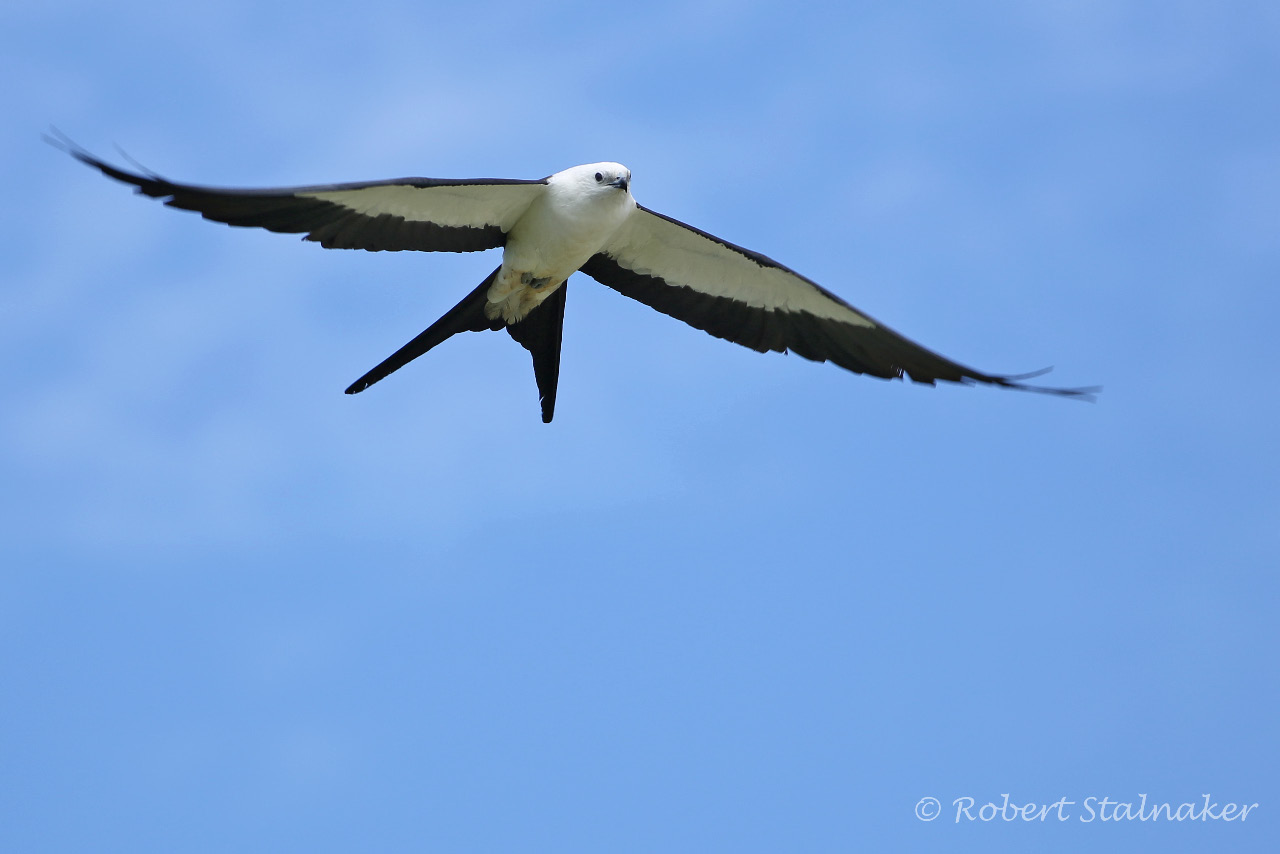
Before the rains came at Lake Apopka, there were only nine Swallow-tailed Kites in the vicinity.  As the skies lose these incredibly beautiful raptors for the season, my eyes remain looking skyward to start searching for early migrant Broad-winged Hawks and falcons, and prepare for the super exciting trip for the annual Florida Keys Hawkwatch.

Just what exactly is this butterfly doing?


CLICK ANY IMAGE TO ENLARGE, "X" in upper right to go back.

This torn and tattered Eastern Tiger Swallowtail butterfly was walking around tapping its abdomen on the road.  Through my binoculars, I could swear it was dropping eggs, but on the road?  Here is a photo of "something"; it sure does not have the appearance of an egg, and if it was expelling excess water as waste, then why was it doing it over an extended period of time?  Enlarge the photo and you can see that it is a clear ball and looks like water.

The odd thing was a Spicebush Swallowtail and a skipper was very close by doing the same thing.

UPDATE:  Monica directed me to an article about "mud-puddling"; the butterflies can't get certain minerals from nectar.  Puddles usually have salt and other needed minerals for reproduction.  The butterfly sucks in the moisture with its proboscis and excretes the waste.

Meret Wilson reported seeing an incredible number of swallows late yesterday northeast of here on the coast.  Today at Lake Apopka, there were large numbers of swallows at very high altitudes.  I just read where Diane Reed is seeing big numbers of swallows also northeast of here, mostly Barn Swallows.

Many thousands of Common Green Darner dragonflies swarmed around the CR 448A access to Lake Apopka.  If the Swallow-tailed Kites had stayed just a couple days longer, they could have really gotten fat and happy.  Or, was it the dragonflies having a huge party now that the kites are gone?

22 Aug 2013, Lake Apopka

Before continuing on to the raptor watch site, I stopped at Jones Ave Stormwater Park.  There are a lot of waders there and I also wanted to check on the Black-bellied Whistling-Duck family.  Predators have reduced the chicks to seven.  If you scroll down to August 3, I have a photo of this family showing 12 ducklings.  Five have been lost to predators in the last few weeks.


Adjacent to the Black-bellied Whistling-Ducks, I saw this Palamedes Swallowtail on the ground.  It is not easy trying to get members of the Swallowtail group to pose; they always seem to be in flight, but once in a while they take a breather.


After arriving at the hawkwatch site, A Red-tailed Hawk soon appeared.  It can't be the same one from the other day because this one has near perfect feathers and is not molting.  Compare the neat and orderly feathers here to the feathers on the other Red-tailed Hawk four images below taken yesterday.


“I skate to where the puck is going to be, not where it has been.” -- Wayne Gretzky


A Swallow-tailed Kite that is a hockey fan !!! This Swallow-tailed Kite has a dragonfly locked on to its radar, but like Wayne Gretzky, it looks by its eyes and head that it is homing in to where the dragonfly is going to be, not where it is now.

I was watching the thousands of Common Green Darners dart around today and when you see 90 degree turns and all the other gyrations they do, it is remarkable that the Swallow-tailed Kite, with its body mass and momentum, can catch these very light and nimble dragonflies in mid-air.  The dragonfly has perhaps the best eyesight in the animal kingdom and that makes it all the more remarkable.  If there is a weakness, they do not see behind them as well and I'm sure that is taken into account by the kites.  This is just one of the millions of things about nature that makes it more awesome the more you study it.

Kite numbers continue to dwindle as we see the last of these raptors migrating south, but a good show was still put on by a group of those still lingering in this area.

21 Aug 2013, Lake Apopka

It looks like the Swallow-tailed Kite migration is winding down.  Big numbers and large kettles of the previous days were not seen the last two days, but that did not stop close encounters with these elegant raptors today.  It was nice to have Sherry and Tom at the watch site with me.

CLICK ANY IMAGE TO ENLARGE, "X" in upper right to go back.


What we lacked in big numbers we made up for in some very close encounters.  It looked like they wanted to show off to us.  Some kites came so close that a focus could not be achieved with some passes they made.


Just before normal peak time Noon until 200, (recent peak at 130PM), the rains came, but it was a good day for some close up viewing.


This Red-tailed Hawk is molting and feathers are missing or growing in around the s4 secondaries.


A young Red-tailed Hawk (on the left) was soaring around with an adult.  If you enlarge the image, you can clearly see the large square wing patch on the juvenile with the tail color being the same pale gray as most of the underwing.  The adult's ragged look is due to feather molt.  The Red-shouldered Hawk's translucent crescent near their wing tips is smaller and more intense and in the shape of a true crescent.  The juvenile Red-tailed Hawk's wing patch is larger, square and not as translucent as the Red-shouldered's, but still clearly seen.

Thursday, August 15, 2013

Week 33

15 Aug 2013, Lake Apopka

It was the "Day of Young Raptors" at Lake Apopka.  Soaring along with two adult Bald Eagles were two sub-adult Bald Eagles.  Numerous juvenile Swallow-tailed Kites were once again filling the skies over the Lake Apopka area.

A juvenile Cooper's Hawk got into a tussle with a Swallow-tailed Kite and once again, it was the kite that was the aggressor.  Juvenile Red-shouldered Hawks and juvenile Red-tailed Hawks joined the show.

 
CLICK ANY IMAGE TO ENLARGE, "X" in upper right to go back
 
 
This is a second young Cooper's Hawk that appeared a few hours later.  It has more of a square tail, like a Sharp-shinned Hawk, but its head projection, wing profile and its full, stiff wing beats all point to a "Coop".  That yellow eye will turn orange then red as it ages.


The second you look at this raptor you know it is a Red-shouldered Hawk with those blazing crescent windows near the wing tips.  The streaking on the chest is a mark of a juvenile.
 
 
Another youngster, this time a Red-tailed Hawk.  So, where is the red tail?  The young ones don't have a red tail.


A young Swallow-tailed Kite admires the food ... but what is it?  Butterfly without the wings?  Grasshopper without the big legs?  Dragonfly?  These kites really love dragonflies, but dragonflies don't have antennae and this bug does.  What is your guess?  Enlarge the image and you can see the antennae.
 
 
Looks like the same abdomen but this one has wings.
 
 
The weird thing here is this is the same kite as the image above, yet the photos were taken 3 1/2 hours apart.  The tail feather splayed and markings on the leading edge of the wing ID this kite as the same kite.  There were about 60 Swallow-tailed Kites in this area, and the ones that get close will drift away out of sight eventually.  Maybe this one just liked me and wanted to come back and show off.